

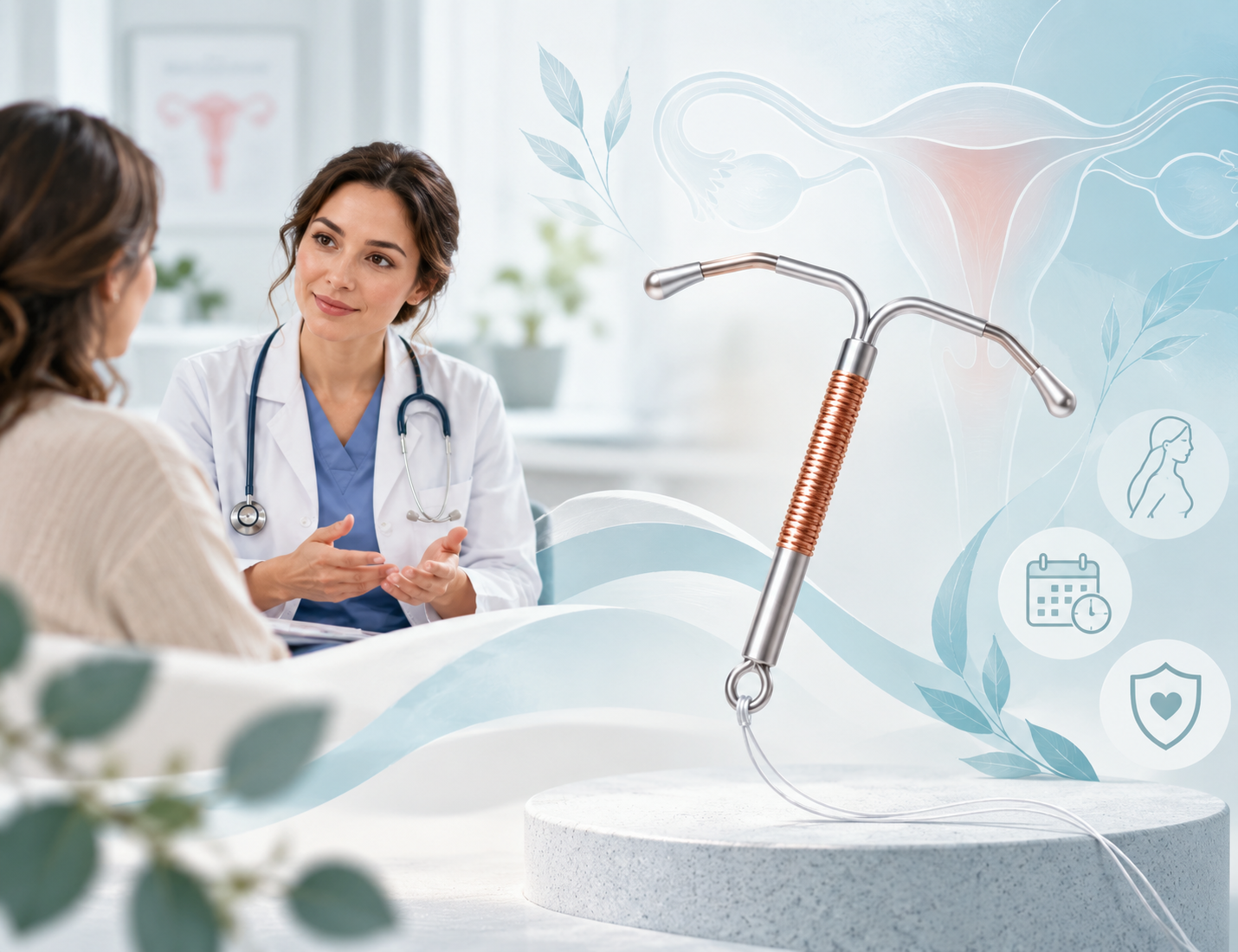

An IUD consultation works best as a two-way conversation, not a one-way instruction. Your gynaecologist brings the clinical knowledge. You bring information about your body, your history, and your priorities that no exam alone can surface. The appointment is where those two things need to meet, and a short amount of preparation on your side makes that meeting far more useful.
This guide walks through what to think about before the appointment, what to ask about the device itself, and what to ask about the procedure, so you leave the consultation with a decision you understand rather than one you were simply given.
Before the Appointment: What to Think Through First
A few questions are worth settling in your own mind before you sit down with your gynaecologist. Raising these upfront shapes the entire rest of the conversation.
Your timeline. IUDs are long-acting, some devices are approved for several years of continuous use. If you are planning a pregnancy in the near term, this changes which options make sense. Tell your gynaecologist your rough timeline rather than waiting to be asked.
Your birth history. Whether you have had a vaginal delivery affects both the physical fit of the device and, separately, how much discomfort you’re likely to feel during insertion. This is not a minor detail. Say it early.
What matters most to you. Some patients prioritise avoiding hormones entirely. Some prioritise the lightest possible periods. Some simply want the option with the lowest chance of needing a second visit to adjust anything. There is no universally correct priority, but naming yours helps your gynaecologist narrow the options instead of walking you through all of them equally.
Any history that affects pain or anxiety. A history of painful periods, pelvic pain, difficulty tolerating speculum exams, or a prior difficult medical procedure is directly relevant to how your insertion should be planned. Clinical guidance from professional bodies specifically flags these as factors that warrant more proactive counseling, not less. If any of this applies to you, say so plainly. It is not oversharing. It is the information your gynaecologist needs to plan the visit properly.
Understanding the IUD Types Your Gynaecologist May Discuss
Broadly, IUDs fall into two categories: hormonal and non-hormonal (copper or copper-silver). Your gynaecologist will walk you through which category fits your stated priorities, but it helps to understand the basic mechanism difference before the conversation starts.
Copper and copper-silver IUDs work without hormones. They create a local environment in the uterus that is inflammatory to sperm, preventing fertilisation, without altering your natural hormonal cycle. Because there is no hormonal component, your periods generally continue as they did before, though some copper IUD users experience heavier or longer periods, particularly in the first two to three months after placement.
Hormonal IUDs release a small, localised dose of progestin. They work primarily by thickening cervical mucus and thinning the uterine lining. Over time, many hormonal IUD users experience lighter periods or, in some cases, no periods at all.
Sizing is part of this conversation, not a separate one. Copper IUDs are commonly available in more than one size, and the right size is not the same for every patient. As a general clinical principle, smaller IUD frame sizes are often better suited to women who have not had a vaginal delivery, while standard or larger sizes are typically indicated for women who have. This is worth raising directly: ask your gynaecologist which size they recommend for you specifically, and why, rather than assuming one size fits everyone who chooses a copper IUD.
Ask your gynaecologist plainly: given what I’ve told you about my priorities and history, which type and which size would you recommend, and what would make you choose differently?
Questions to Ask About Insertion and Pain Management
This is the part of the conversation patients are least prepared for, and it is where recent clinical guidance has shifted meaningfully.
Pain management should be offered to you, not something you have to fight for. Professional gynaecological bodies now recommend that every patient having an IUD placed be counseled about the potential for pain and offered options to manage it, as a matter of standard practice, not as a special request. This is a relatively recent and significant shift in clinical guidance, and it is worth knowing before you walk in.
Ask specifically what pain management options are available. The choices your gynaecologist may offer include:
- A paracervical block(a local anaesthetic injection around the cervix), which current evidence identifies as one of the more effective options for reducing pain during placement
- Topical lidocaine, applied as a spray, gel, or cream directly to the cervix before the procedure
- Oral medication, taken in advance of the appointment
It’s worth knowing that oral ibuprofen alone, while commonly offered, has not been shown in clinical research to meaningfully reduce pain during IUD insertion. If ibuprofen is the only option mentioned to you, it is reasonable to ask what else is available.
Ask how long the procedure itself typically takes. IUD insertion is generally a short outpatient procedure, typically completed within about 5 to 15 minutes, with some additional time if pain management is administered beforehand. Knowing this in advance helps set realistic expectations for the appointment.
Ask what you might feel, step by step. A clear explanation of each stage, examination, measurement of the uterus, and placement, reduces anxiety more than a vague reassurance that “it will be quick.” If your gynaecologist walks you through the sequence, you are less likely to be caught off guard by any individual step.
If you have specific risk factors, say so and ask directly. Patients who have not had a vaginal delivery, who have a history of painful periods, pelvic pain, or anxiety around gynaecological exams, or who have had a difficult prior procedure, may be more likely to experience discomfort. There is currently no reliable way for a clinician to predict in advance who will find the procedure more difficult, which is exactly why raising your history matters. It gives your gynaecologist the context to plan for it rather than react to it mid-procedure.
Ask what happens if the pain is worse than expected. A brief conversation about this beforehand, whether the procedure can be paused, what the next step would be, is a reasonable thing to ask and a reasonable thing for your gynaecologist to answer clearly.
Questions to Ask About Aftercare and Follow-Up
What symptoms are expected, and what symptoms mean you should call.
Mild cramping and some spotting for a few days after placement is common. Ask specifically what would be considered abnormal, unusually heavy bleeding, fever, severe pain, or an inability to feel the device’s strings, so you know the difference between an expected recovery and something that needs attention.
When and how you should check the strings, and what it means if you can’t feel them.
When your follow-up visit should happen, and what it will involve.
What removal looks like, if and when you decide you want the device out, and whether that is something that can typically be done in a single, similarly short visit.
Frequently Asked Questions
Do I need to have given birth before to get an IUD?
No. IUDs are commonly placed in women who have never given birth. It is worth discussing with your gynaecologist, since this history can affect which size device is recommended and how the insertion is planned for comfort.
Will an IUD insertion hurt?
Pain during insertion varies significantly between individuals. Current clinical guidance recommends that every patient be counseled about the possibility of pain and offered pain management options rather than assuming discomfort is unavoidable or uniform. Ask your gynaecologist directly what options are available to you.
How long does the IUD insertion procedure take?
The procedure itself is typically brief, generally around 5 to 15 minutes, with additional time if a pain management option such as a local anaesthetic is used beforehand.
What is the difference between a copper IUD and a hormonal IUD?
A copper IUD works without hormones, preventing fertilisation through a local effect in the uterus, and generally does not change your natural menstrual cycle. A hormonal IUD releases a small localised dose of progestin and, for many users, results in lighter periods over time. Your gynaecologist can help you weigh which fits your priorities.
Does IUD size matter?
Yes. Copper IUDs are often available in more than one size, and the appropriate size can depend on factors including whether you have had a vaginal delivery. Ask your gynaecologist which size they recommend for you and why.
What should I tell my gynaecologist before the appointment?
Your pregnancy timeline, whether hormones are a factor you want to avoid or don’t mind, your birth history, and any history of painful periods, pelvic pain, or difficulty with prior gynaecological exams. This information shapes both the device recommendation and how the procedure itself is planned.
SMB Corporation’s IUD Range
SMB Corporation manufactures copper and copper-silver intrauterine devices used by gynaecologists and reproductive health programmes across 148+ countries, including size-specific options for nulliparous and multiparous patients.
- SMB Copper T 380A— the standard copper IUD, offering long-acting, non-hormonal contraception
- SMB Silver IUD TCu 380Ag— available in Mini, Normal, and Maxi sizes, with the Mini size specifically suited to nulliparous women
- [SMB TCu 380 Plus]— available across the same three sizes for tailored fit
- [SMB Post Delivery IUD TCu 380A]— designed for postpartum placement